
TrulyPrintable
Unlock the Secrets of Your Brain: The Ultimate Neuroscience Guide
In stock
Couldn't load pickup availability
🧠 Unlock the Secrets of Your Brain
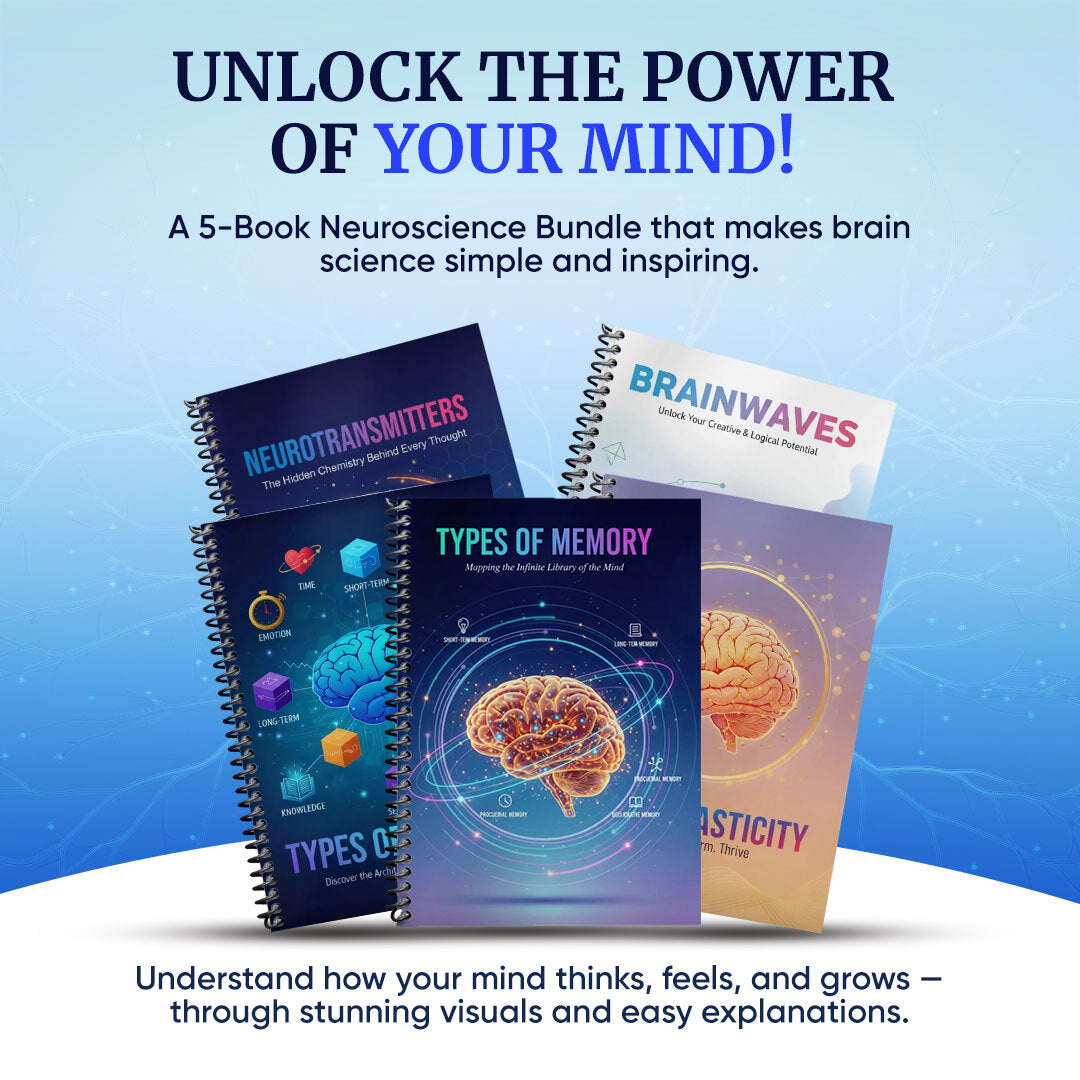
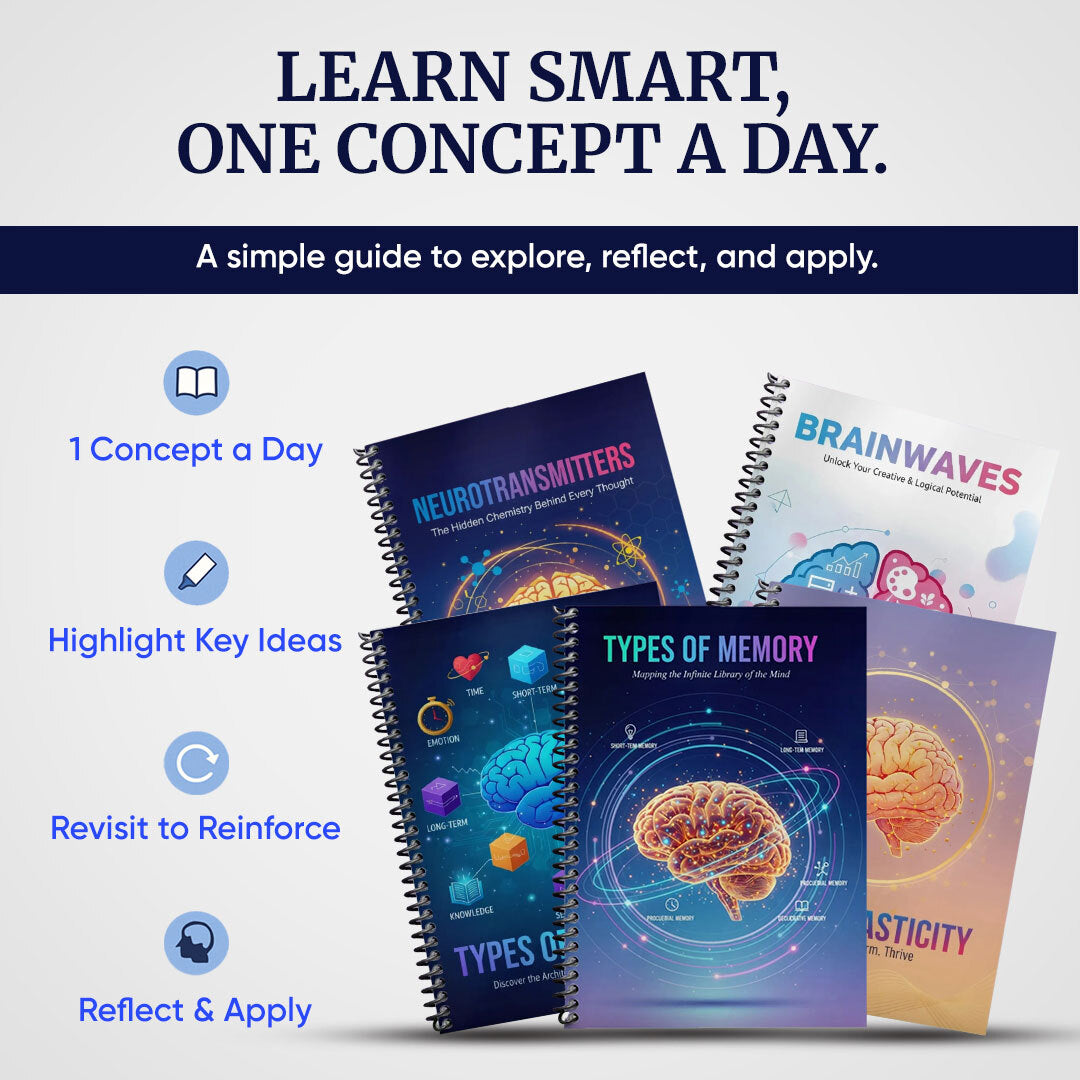
A stunning 5-book neuroscience bundle that makes brain science simple, visual, and inspiring.
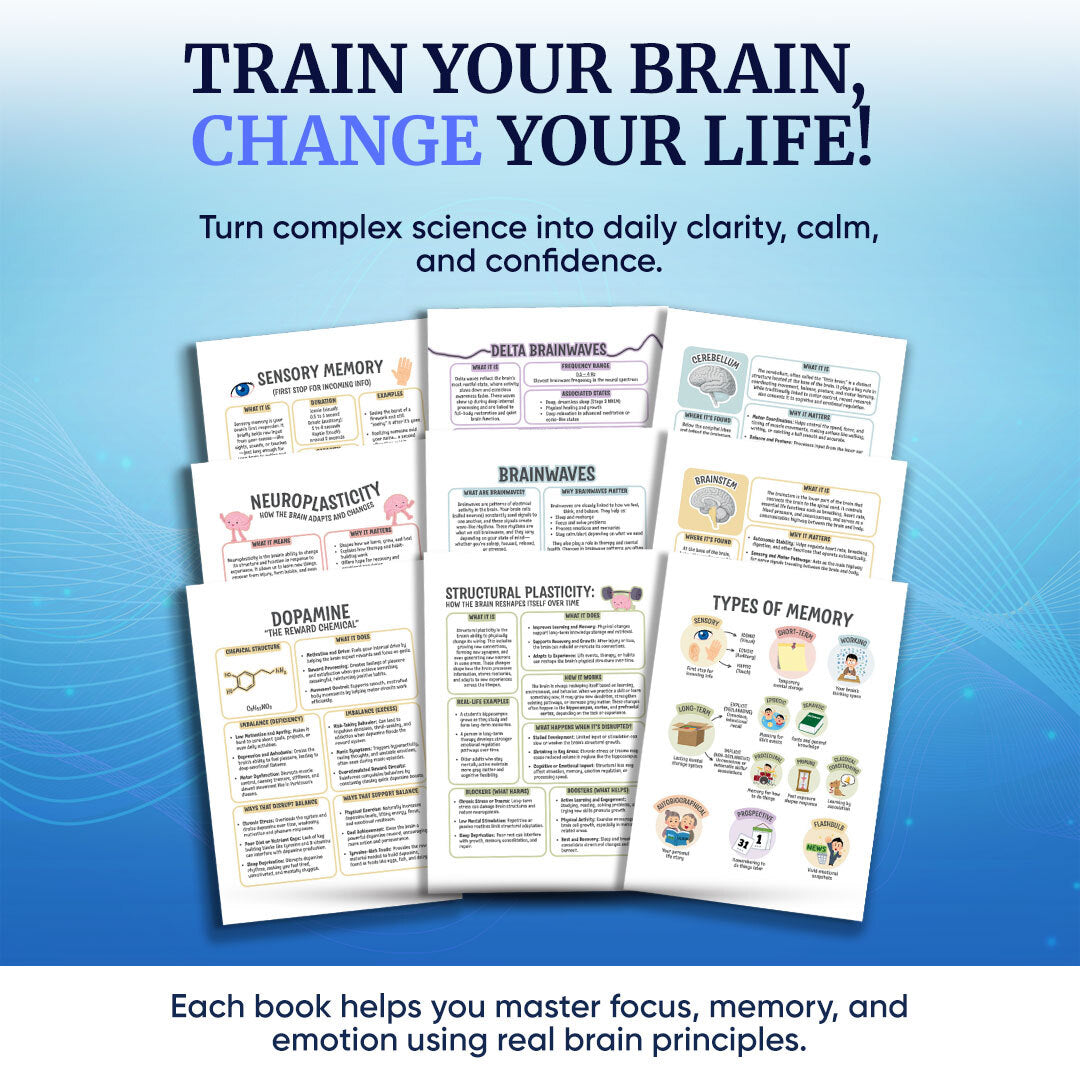
Discover the fascinating world of brainwaves, neurotransmitters, memory systems, neuroplasticity, and cognitive function — all explained in a clear and visually engaging way.
Whether you're a student, teacher, mental health professional, or a curious learner, this guide transforms the way you understand your brain and how it works.
✨ Why This Guide Is Essential
- ⚡ Instant Download — Access immediately after purchase.
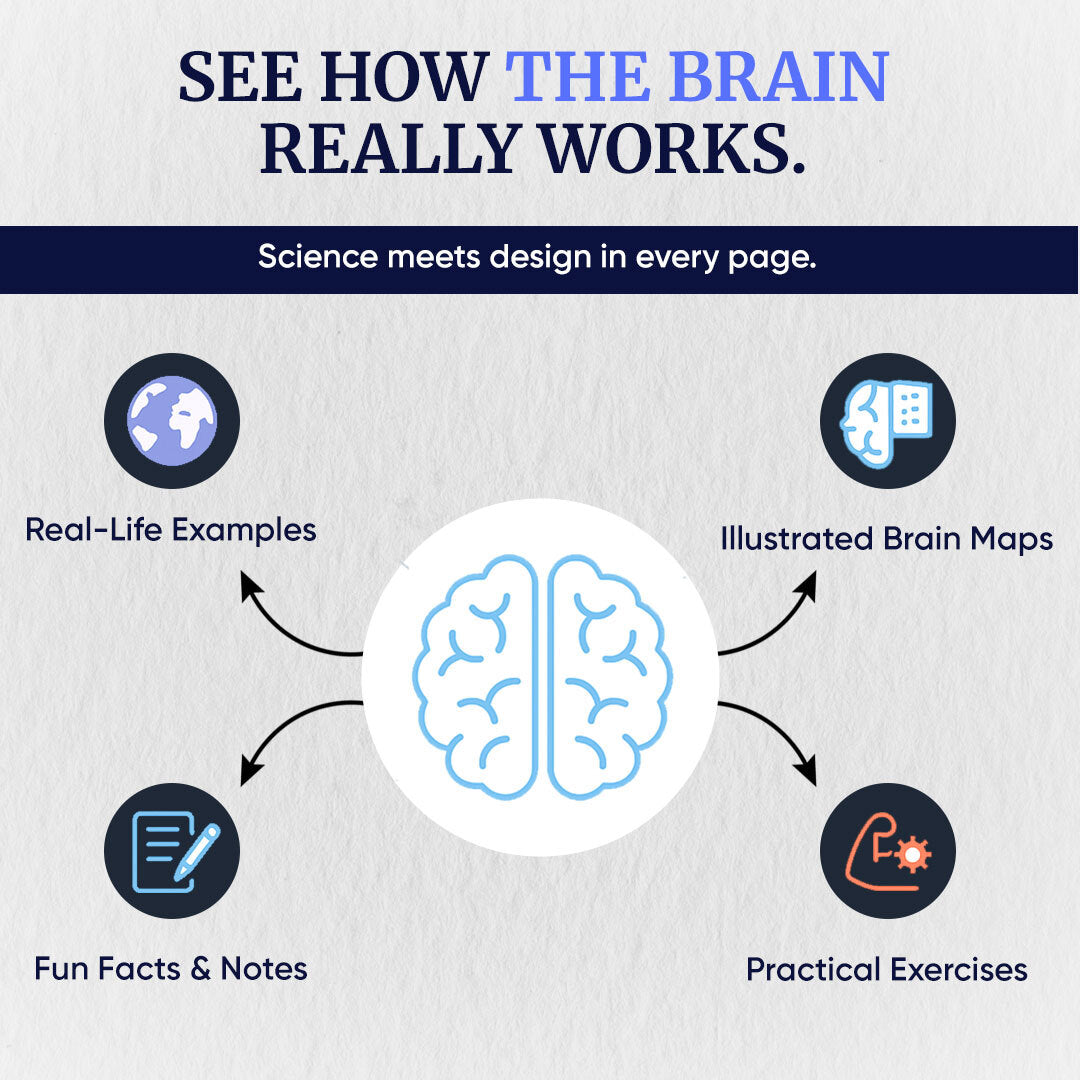
- 🎨 Beautiful visual layouts that simplify complex neuroscience.
- ♾️ Lifetime Access to all files — yours forever.
- 👩🏫 Perfect for students, educators, therapists, and lifelong learners.
📘 What You'll Learn
- 🔹 How brainwaves shape your mood, focus & sleep.
- 🔹 The role of neurotransmitters in motivation, memory & emotional balance.
- 🔹 The different types of memory & how to improve recall.
- 🔹 Neuroplasticity — how your brain adapts, learns & heals.
- 🔹 Practical tips for brain health & cognitive performance.
📄 Product Specifications
- 📁 Format: PDF (US Letter)
- 📘 Contains: 5 Neuroscience Guides
- 🖼️ 50+ pages of visual, illustrated content
- 💻 Works on all devices: mobile, PC, tablet
- 📥 Instant Digital Download
💡 What Problem Does This Solve?
Understanding the brain can feel overwhelming — scientific terms, complicated diagrams, and dense textbooks.
This guide breaks everything down into clear, simple visuals and actionable insights so you can:
- Improve focus, memory, and emotional balance
- Understand how your mind really works
- Apply neuroscience to everyday life
- Learn quickly without confusion
🌟 What Makes This Guide Valuable?
- ✔️ More practical than academic textbooks
- ✔️ Designed for real-world learning
- ✔️ Perfect mix of science + simplicity
- ✔️ Stunning visuals make concepts easy to remember
⭐ What Our Customers Say
“This guide made neuroscience so easy. I use it in my classroom — students love it!” — Sarah, Educator
“Helped me improve my memory and focus. So worth it!” — Raj, Student
“Clear, accurate, and beautifully designed. A must-have for professionals.” — Dr. Mehta
“The visuals are incredible. I finally understand how my brain works.” — Priya
📥 Download Now & Unlock the Power of Your Mind
Start your journey toward better focus, memory, learning, and emotional balance.
Your brain will thank you. 💙
- 5 stars: 117 (85%)
- 4 stars: 19 (14%)
- 3 stars: 0 (0%)
- 2 stars: 0 (0%)
- 1 star: 2 (1%)
The medulla page gave us a new appreciation for basic reflexes like coughing and swallowing. It highlights the brain's role in keeping us safe.
Reading about sensory memory overload described my child perfectly. It was validating to see her experience explained scientifically. Felt less alone.
The "What It Is" boxes are perfect. Clear, concise definitions that you can actually remember and use.
It gave us a neutral, scientific language to discuss behavior. Instead of "you're not trying," we say "let's give your working memory a boost with a list." Less emotional, more productive.
When I explained to my son that his trouble remembering steps isn't him being "lazy," but his working memory needing support, he looked relieved. That moment was worth it.
I shared some sections with my child's teacher. The breakdown of procedural memory and classical conditioning gave us common language to discuss his learning habits. Very helpful.
When my child has a meltdown, I can now think "amygdala hijack" instead of "he's doing this to me." It helps me respond instead of react.
The information isn't faddish; it's core neuroscience presented in a timeless way. I feel this will be useful for years as my children grow and face new challenges.
Understanding the basal ganglia's role in habit formation helped us be more patient and consistent when building new routines.
I love that it explains what each part does and why it matters. It goes beyond just naming brain parts to explaining their roles in daily life.
For the price, the amount of well-organized information is impressive. It covers memory, brain parts, chemicals, and plasticity. A comprehensive starting point.
I'm a parent and a teacher. I've used ideas from this in my classroom, especially around attention and memory. The principles are universal.
My spouse and I read sections together and it helped us get on the same page about parenting strategies. The material provides a common reference point.
Connecting the midbrain to dopamine production and motivation was a key insight. It explains the "why try?" feeling some kids get.
It doesn't just look at behavior; it looks at the underlying sensory, cognitive, and emotional systems. That holistic view is so valuable.
Appreciate that it doesn’t claim to cure anything. It’s solid science presented clearly. The lifespan plasticity page was encouraging—it’s never too late to learn new patterns.
It doesn't dumb things down; it clarifies. That respect for the reader's intelligence makes the learning experience more enjoyable.
The sensory memory page explained why my son gets overwhelmed in noisy places. We now use "simplified environments" as an enhancer. Immediate, practical application.
I can see myself referring to this for years, even as my children become adults. The principles of brain function don't expire.
While I got it for my child, I find the memory consolidation and forgetting pages helpful for my own life. It's applicable across ages.
It’s like a clear, friendly neuroscience handbook. I appreciate the "disruptors" and "enhancers" lists for each topic—gives you concrete things to try or avoid. Well worth it.
The oxytocin page reinforced the importance of connection and touch, especially after conflicts. It's science backing up the instinct to hug it out.
Seeing how factors like sleep and stress affect memory and learning reminded me it's not all about willpower. It helped me be kinder to myself and my child on tough days.
The mention of the brain's cleanup system during delta sleep motivated all of us to prioritize sleep. A powerful incentive.
Dinner table talk has improved! We discuss things like "what's a flashbulb memory you have?" or "when did you use procedural memory today?"
PDF format is perfect. I printed only the pages I needed for a specific challenge. The A4 size is clear and the layout is clean. Very user-friendly.
The spatial training ideas (puzzles, building) gave us new, screen-free activity ideas. Good for rainy days.
It takes the brain from a mysterious black box to a understandable, if complex, system. That demystification reduces frustration for everyone.
Having these resources at home has made learning about the brain a normal family activity. It takes the mystery out of behavior and learning.
The adenosine page finally made caffeine's effect clear to my teenager. He now understands why his afternoon soda might ruin his sleep.
The writing is calm and factual, which is reassuring when dealing with stressful topics like brain injury or impairment. It provides info without causing panic.
Reading about trauma-related plasticity helped me understand my foster child's reactions better. It’s not a therapy replacement, but it gave me a framework for compassion and patience.